

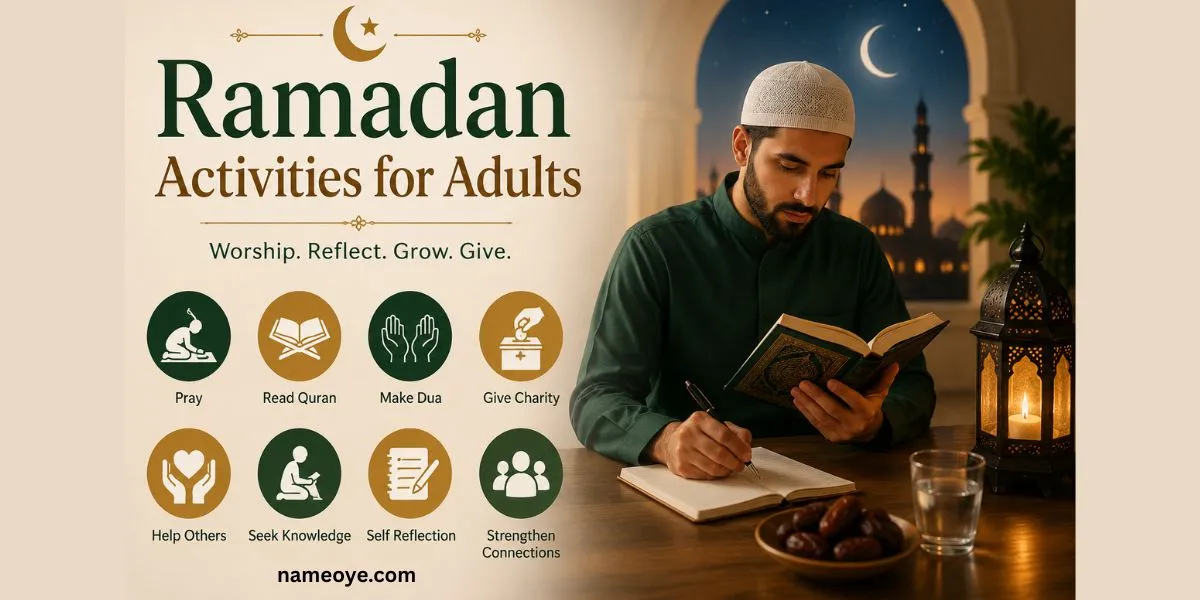
You wake up for suhoor, pray, fast, break your fast, sleep, and repeat—but Ramadan is much more than a daily routine. It is a time for spiritual growth, self-improvement, reflection, and getting closer to Allah ﷻ.
Instead of only focusing on fasting, you can explore many Ramadan activities for adults like extra prayers, Quran reading, charity, kindness, and daily self-reflection. These simple habits can make your Ramadan more meaningful and fulfilling.
If your days feel repetitive, it’s time to change that. Add purpose to your routine with small but powerful actions that improve your faith, mindset, and character.
Don’t just go through Ramadan—use it to grow spiritually and become better in every way.
Ramadan Activities for Adults
- Wake up early for Suhoor with mindfulness.
- Pray Fajr on time every day.
- Read one page of the Quran after each prayer.
- Complete a full Quran recitation during Ramadan.
- Listen to a Quran recitation daily.
- Memorize a new Quran verse each day.
- Learn the meaning of a short Surah.
- Reflect on Quranic lessons in a journal.
- Make a daily gratitude list.
- Increase sincere dua after every prayer.
- Attend Taraweeh prayers regularly.
- Perform extra voluntary prayers.
- Practice patience during fasting hours.
- Control anger in challenging situations.
- Avoid unnecessary arguments.
- Spend time in quiet reflection.
- Learn one new Islamic teaching daily.
- Read a book about the life of the Prophet Muhammad ﷺ.
- Study the stories of the Prophets.
- Watch an educational Islamic lecture.
- Revise previously memorized Quran passages.
- Send encouraging messages to family members.
- Reconnect with distant relatives.
- Call parents and express appreciation.
- Help prepare the Iftar meal.
- Invite someone to share Iftar.
- Donate food to those in need.
- Support a local charity project.
- Sponsor a fasting person’s meal.
- Give a small amount of charity every day.
- Donate clothing to underprivileged families.
- Volunteer for a community service activity.
- Visit a sick person.
- Comfort someone experiencing hardship.
- Offer assistance to an elderly neighbor.
- Share beneficial Islamic reminders.
- Encourage someone to pray regularly.
- Help a child learn a short Surah.
- Teach a useful life skill to someone.
- Practice speaking kindly throughout the day.
- Forgive someone who has hurt you.
- Seek forgiveness from others.
- Make dua for people around the world.
- Pray for those facing difficulties.
- Write down personal spiritual goals.
- Evaluate daily habits before sleeping.
- Reduce screen time intentionally.
- Spend an hour without digital devices.
- Organize a personal prayer space.
- Declutter a room in your home.
- Keep a Ramadan reflection notebook.
- Track daily acts of worship.
- Learn proper Quran pronunciation.
- Study the names of Allah.
- Reflect on Allah’s blessings.
- Practice contentment with what you have.
- Drink water mindfully between Iftar and Suhoor.
- Follow a balanced eating routine.
- Take a peaceful walk after Iftar.
- Stretch gently to maintain wellness.
- Get sufficient rest each night.
- Avoid wasting food at meals.
- Prepare healthy Iftar options.
- Share homemade food with neighbors.
- Express appreciation to your spouse.
- Spend quality time with family members.
- Create a Ramadan memory journal.
- Learn about Islamic history.
- Read authentic Hadith collections.
- Memorize a new Hadith.
- Practice one Sunnah consistently.
- Improve concentration during prayer.
- Make a list of duas to recite daily.
- Spend time making dhikr.
- Repeat phrases of praise and remembrance.
- Reflect on the blessings of fasting.
- Observe moments of silence for contemplation.
- Practice generosity without seeking recognition.
- Support a friend emotionally.
- Offer sincere compliments to others.
- Help resolve a misunderstanding peacefully.
- Write a letter of appreciation to someone.
- Prepare care packages for families in need.
- Contribute to a community fundraiser.
- Clean and maintain the local mosque.
- Attend an Islamic study circle.
- Learn about the companions of the Prophet ﷺ.
- Research an Islamic scholar’s life.
- Strengthen trust in Allah through reflection.
- Make a habit of saying kind words.
- Avoid gossip and negative speech.
- Practice honesty in every interaction.
- Focus on improving self-discipline.
- Learn about the virtues of Ramadan.
- Make intentions before every good deed.
- Keep a daily record of blessings received.
- Reflect on personal growth since last Ramadan.
- Spend time appreciating nature.
- Learn a new supplication.
- Increase remembrance before sunrise.
- Increase remembrance before sunset.
- Spend the last ten nights in extra worship.
- Search for Laylatul Qadr through devotion.
- Make an extensive dua list for loved ones.
- Read about the rewards of charity.
- Encourage others to perform good deeds.
- Help organize a charitable initiative.
- Support an orphan through donations.
- Learn proper etiquette of dua.
- Review personal achievements during Ramadan.
- Set goals for after Ramadan.
- Thank Allah for every completed fast.
- Pray for guidance and wisdom.
- Focus on improving humility.
- Practice self-control in conversations.
- Offer water or dates at Iftar gatherings.
- Learn about the importance of sincerity.
- Dedicate time to personal repentance.
- End each day with self-reflection.
- Celebrate spiritual progress with gratitude.
Read More: Best Islamic Usernames For Instagram
Quran Reading Ramadan Activities for Adults
- Read one page of the Quran after Fajr.
- Read two pages before Suhoor each morning.
- Complete one Juz during the week.
- Follow a daily Quran reading schedule.
- Read the Quran aloud with proper pronunciation.
- Read a selected Surah before Iftar.
- Read the final pages of a Juz before sleeping.
- Focus on reading slowly and attentively.
- Read the Quran in a quiet environment.
- Read a passage and note its main message.
- Read verses related to patience and perseverance.
- Read verses about gratitude and blessings.
- Read passages describing Paradise.
- Read verses about mercy and forgiveness.
- Read stories of the Prophets from the Quran.
- Read verses about charity and generosity.
- Read passages that discuss faith and trust.
- Read a Surah you rarely recite.
- Read Quranic verses about good character.
- Read passages concerning prayer and worship.
- Read a complete Surah in one sitting.
- Read verses about repentance and renewal.
- Read the opening verses of a new Surah.
- Read Quranic passages focused on wisdom.
- Read verses that inspire hope.
- Read passages that encourage self-improvement.
- Read a section of the Quran before Taraweeh.
- Read verses that discuss accountability.
- Read Quranic descriptions of creation.
- Read passages about the power of dua.
- Read verses emphasizing honesty and integrity.
- Read Quranic guidance on family relationships.
- Read passages about kindness to others.
- Read verses highlighting the importance of justice.
- Read Quranic reminders about patience during hardship.
- Read passages that encourage reflection.
- Read verses focused on gratitude toward Allah.
- Read Quranic teachings about humility.
- Read passages discussing the signs of Allah.
- Read a Surah and identify its key themes.
- Read verses that strengthen spiritual motivation.
- Read passages that encourage forgiveness of others.
- Read Quranic lessons about self-discipline.
- Read verses related to compassion and mercy.
- Read passages about reliance on Allah.
- Read Quranic reminders about the Hereafter.
- Read verses that promote peaceful conduct.
- Read passages about sincerity in worship.
- Read Quranic teachings on perseverance in faith.
- Read verses that encourage good deeds.
- Read passages about seeking knowledge.
- Read Quranic guidance on thankfulness.
- Read verses that inspire optimism.
- Read passages that discuss divine guidance.
- Read Quranic teachings about personal responsibility.
- Read verses that encourage remembrance of Allah.
- Read passages focused on spiritual purification.
- Read Quranic lessons about righteous living.
- Read a favorite Surah and reflect on its meaning.
- Read the final pages of the Quran during the last days of Ramadan.
Charity-Based Ramadan Activities for Adults
- Donate a meal to a fasting person.
- Contribute to a local food bank.
- Give a daily amount of Sadaqah throughout Ramadan.
- Sponsor an orphan’s monthly needs.
- Purchase groceries for a struggling family.
- Donate clean clothing to those in need.
- Provide dates for a community Iftar.
- Support a Ramadan fundraising campaign.
- Pay Zakat if it is due.
- Help cover a family’s utility expenses.
- Donate school supplies to underprivileged children.
- Fund a clean water project.
- Contribute toward mosque maintenance.
- Purchase Eid outfits for children in need.
- Give blankets to homeless individuals.
- Support a refugee assistance program.
- Donate hygiene kits to vulnerable families.
- Help pay for someone’s medical treatment.
- Contribute to a community kitchen.
- Provide transportation assistance to an elderly person.
- Donate books to an educational charity.
- Sponsor a Quran for someone learning to read.
- Purchase wheelchairs for people with disabilities.
- Support a widow through financial assistance.
- Donate baby essentials to a family in need.
- Contribute to disaster relief efforts.
- Buy fruits and vegetables for a food distribution drive.
- Support a scholarship fund.
- Donate prayer mats to a mosque.
- Fund an Islamic education program.
- Provide Eid gifts for orphans.
- Donate reusable water bottles to workers.
- Help furnish a home for a needy family.
- Contribute to a housing assistance project.
- Purchase medicine for someone unable to afford it.
- Donate hearing aids to those in need.
- Support a community welfare organization.
- Pay for a student’s examination fees.
- Donate cooking supplies to a shelter.
- Contribute to a village development initiative.
- Provide Iftar boxes for laborers.
- Donate fresh bread to a charitable organization.
- Support a senior citizen care program.
- Fund the planting of fruit-bearing trees.
- Donate essential household items to a family.
- Help repair a struggling family’s home.
- Contribute to a debt-relief charity.
- Provide educational materials for adult learners.
- Donate emergency food parcels.
- Sponsor a community well.
- Support a meal delivery service for the elderly.
- Donate winter clothing to low-income families.
- Provide financial assistance to a newly converted Muslim.
- Contribute to a hospital charity fund.
- Donate sewing machines to support livelihoods.
- Purchase Qurans for a learning center.
- Fund solar lighting for underserved communities.
- Donate nutritious snacks for children’s programs.
- Support a vocational training project.
- Leave an anonymous gift for a family experiencing hardship.
Ramadan Activities for Adults to Strengthen Faith
- Renew your intention at the start of each fasting day.
- Pray every Salah at its prescribed time.
- Perform two units of voluntary prayer before Fajr.
- Spend ten minutes in quiet remembrance of Allah.
- Recite morning adhkar consistently.
- Recite evening adhkar consistently.
- Reflect on one of Allah’s names each day.
- Learn the meaning of a new supplication.
- Make heartfelt dua after every obligatory prayer.
- Dedicate time to sincere repentance.
- Increase your reliance on Allah during challenges.
- Reflect on blessings you often overlook.
- Practice gratitude through daily journaling.
- Read about the rewards of patience in Islam.
- Focus on maintaining sincerity in all good deeds.
- Observe moments of solitude for spiritual reflection.
- Study the virtues of Ramadan.
- Learn about the importance of Tawakkul.
- Read authentic teachings about the Hereafter.
- Reflect on the temporary nature of worldly life.
- Attend a religious lecture at your local mosque.
- Participate in an Islamic learning circle.
- Listen to a beneficial reminder during your commute.
- Learn about the lives of the righteous companions.
- Study examples of prophetic character.
- Practice humility in daily interactions.
- Make a list of spiritual goals for Ramadan.
- Evaluate your progress each evening.
- Reduce distractions that weaken spiritual focus.
- Spend time contemplating the signs of Allah in creation.
- Increase the frequency of Istighfar throughout the day.
- Recite Salawat upon the Prophet ﷺ regularly.
- Focus on improving concentration during worship.
- Learn the virtues of different acts of worship.
- Keep a personal faith reflection notebook.
- Avoid speech that provides no benefit.
- Strengthen self-control through conscious discipline.
- Make dua for the guidance of others.
- Pray for the wellbeing of the Muslim community.
- Reflect on how fasting develops God-consciousness.
- Learn about the conditions of accepted deeds.
- Spend time reading about Paradise.
- Read authentic descriptions of accountability on the Day of Judgment.
- Practice generosity with a sincere heart.
- Seek forgiveness from someone you have wronged.
- Forgive a person who has hurt you.
- Encourage a friend to engage in worship.
- Share a beneficial Islamic reminder with others.
- Spend extra time in the mosque for reflection.
- Make a daily commitment to improve one character trait.
- Learn about the wisdom behind Islamic rulings.
- Reflect on past prayers that Allah answered.
- Thank Allah after completing each fast.
- Spend time making dua during the last third of the night.
- Reflect on the purpose of your life.
- Strengthen your connection with Allah through consistent worship.
- Seek opportunities for hidden good deeds.
- Increase devotion during the last ten nights.
- Search for Laylatul Qadr through dedicated worship.
- Create a plan to maintain your spiritual growth after Ramadan.
Creative Ramadan Activities for Adults at Home
- Design a personalized Ramadan calendar.
- Create a Ramadan-themed vision board.
- Decorate a special corner for worship and reflection.
- Make handmade Ramadan greeting cards.
- Craft decorative lanterns from paper.
- Design custom bookmarks with Islamic quotes.
- Create a gratitude jar for daily blessings.
- Assemble a Ramadan memory scrapbook.
- Paint a canvas featuring meaningful calligraphy.
- Create a wall display of daily Ramadan goals.
- Design inspirational posters for your home.
- Make a collection of handwritten duas.
- Decorate reusable gift bags for Eid.
- Create a family Ramadan photo album.
- Build a countdown board for Eid.
- Design personalized place cards for Iftar gatherings.
- Create a decorative Quran stand cover.
- Make framed artwork featuring Arabic phrases.
- Start a Ramadan reflection journal with creative layouts.
- Design a spiritual habit tracker.
- Create a homemade Ramadan centerpiece.
- Arrange a decorative display with dates and lanterns.
- Write and illustrate a collection of favorite duas.
- Design custom Ramadan recipe cards.
- Make a handmade Eid gift box.
- Create a blessings collage using magazine cutouts.
- Decorate candles for your dining table.
- Design a Ramadan-themed door wreath.
- Create an artistic display of the ninety-nine names of Allah.
- Make decorative table settings for Iftar.
- Craft a hanging moon-and-stars decoration.
- Create personalized labels for charity packages.
- Design a Ramadan quote board.
- Make a decorative banner for your living space.
- Create a memory jar filled with daily reflections.
- Design a collection of inspirational affirmation cards.
- Arrange a mini indoor Ramadan exhibition.
- Create a handmade notebook for spiritual goals.
- Design decorative coasters with geometric patterns.
- Make an Eid celebration planning board.
- Create a family blessings tree display.
- Design a set of Ramadan-themed wall prints.
- Organize a home photography project capturing Ramadan moments.
- Create a decorative tray arrangement for serving dates.
- Make a collection of handwritten inspirational notes.
- Design a personalized Ramadan checklist.
- Create a visual timeline of your Ramadan journey.
- Decorate storage jars for Iftar snacks.
- Make a handcrafted gift tag collection for Eid presents.
- Design an artistic chart for tracking good deeds.
- Create a home display featuring favorite Quran verses.
- Make a decorative mobile with crescent moon shapes.
- Design a reflection board for daily lessons learned.
- Create a Ramadan-themed puzzle or word challenge.
- Arrange a creative shelf display with meaningful items.
- Make a handcrafted envelope set for charity donations.
- Design a personal spiritual milestone chart.
- Create an illustrated collection of Ramadan memories.
- Build a decorative display celebrating acts of kindness.
- Compile a creative keepsake book about your Ramadan experience.
Educational Ramadan Activities for Adults
- Enroll in an online Islamic studies course.
- Study a new topic in fiqh each week.
- Read a tafsir of selected Quran verses daily.
- Learn Arabic vocabulary related to the Quran.
- Watch a structured lecture series on Islamic history.
- Take notes while listening to religious talks.
- Read a biography of a classical Islamic scholar.
- Study the seerah of Prophet Muhammad ﷺ in chapters.
- Compare different tafsir explanations of one verse.
- Learn the rules of Tajweed step by step.
- Practice correct pronunciation of Arabic letters.
- Study hadith with explanation and context.
- Memorize a hadith and understand its meaning.
- Research the causes of revelation (Asbab al-Nuzul).
- Learn about the compilation of the Quran.
- Study the pillars of Islam in detail.
- Explore the pillars of Iman with scholarly explanation.
- Read academic books on Islamic ethics.
- Analyze Quranic themes across multiple surahs.
- Attend virtual Islamic seminars or webinars.
- Follow a structured Ramadan knowledge syllabus.
- Learn about Islamic rulings on daily life matters.
- Study the differences between Makki and Madani surahs.
- Read scholarly commentary on selected hadith.
- Learn about Islamic calendar and its significance.
- Research historical events in early Islam.
- Study the lives of the four rightly guided caliphs.
- Learn about major Islamic empires and contributions.
- Compare interpretations of Islamic scholars.
- Create summary notes after each study session.
- Write reflections on newly learned concepts.
- Join an online Quranic study group.
- Participate in group discussions about Islamic topics.
- Teach someone a concept you recently learned.
- Learn the rules of fasting in different situations.
- Study zakat calculation methods in detail.
- Understand Islamic rulings on charity distribution.
- Learn about etiquette of seeking knowledge in Islam.
- Research famous Islamic libraries and manuscripts.
- Study the sciences of Hadith authentication.
- Learn the meanings of common Quranic root words.
- Explore the linguistic beauty of the Quran.
- Read scholarly articles on Islamic spirituality.
- Compare translations of Quranic verses.
- Analyze moral lessons from prophetic stories.
- Study Islamic rulings on family life.
- Learn about rights of neighbors in Islam.
- Research the importance of sincerity in worship.
- Study the concept of Taqwa in Islamic theology.
- Learn about Islamic views on time management.
- Review past Ramadan learning notes for revision.
- Study the significance of Laylatul Qadr academically.
- Learn about famous Quran reciters and their styles.
- Explore the history of Quranic manuscripts.
- Study Islamic perspectives on self-development.
- Learn about permissible and impermissible acts in fasting.
- Read explanations of du’as from authentic sources.
- Study the structure and themes of selected surahs.
- Learn how scholars derive rulings from Quran and Sunnah.
- Create a personal curriculum for post-Ramadan learning continuation.
Family Friendly Ramadan Activities for Adults
- Plan daily family Iftar meals together.
- Assign each family member a role for Suhoor preparation.
- Recite Quran collectively after Maghrib prayer.
- Hold a short family reflection circle after Taraweeh.
- Create a shared family Ramadan goals list.
- Organize a family charity donation drive.
- Prepare Iftar meals together in the kitchen.
- Share daily Ramadan lessons at the dinner table.
- Watch an Islamic educational video as a family.
- Read a short Hadith together each evening.
- Encourage each member to share one good deed daily.
- Set up a family prayer schedule board.
- Pray Maghrib together in congregation at home.
- Practice memorizing short Surahs as a group.
- Create a family gratitude sharing moment before Iftar.
- Plan and pack food boxes for neighbors together.
- Visit relatives as a family during Ramadan evenings.
- Call extended family members together.
- Prepare Eid plans as a family project.
- Decorate the home together for Ramadan.
- Create a shared Ramadan countdown calendar.
- Make handmade gifts for family members.
- Organize a family storytelling session about Islamic history.
- Share personal reflections after each Taraweeh prayer.
- Assign rotating roles for leading family duas.
- Learn and practice a new dua together weekly.
- Conduct a family Quran reading challenge.
- Track collective family good deeds on a chart.
- Help children or younger siblings learn basic prayers.
- Set screen-free hours for spiritual family bonding.
- Eat Suhoor together whenever possible.
- Discuss the meaning of fasting as a family topic.
- Encourage each other to wake up for Tahajjud.
- Plan a weekly family act of charity.
- Prepare care packages for delivery as a team.
- Share inspirational Islamic stories at bedtime.
- Create a family prayer corner at home.
- Organize a small home-based Iftar gathering for guests.
- Practice kindness challenges within the family.
- Take a family walk after Iftar for reflection.
- Make a joint list of duas for the last ten nights.
- Assign rotating family members to give Ramadan reminders.
- Create a family journal documenting Ramadan experiences.
- Help each other correct Quran recitation.
- Plan and cook Eid breakfast together.
- Discuss lessons learned from fasting each day.
- Encourage family members to forgive and reconcile.
- Write appreciation notes for each family member.
- Make a family charity box and contribute daily.
- Organize a home cleanup project together.
- Share responsibilities for mosque visits as a family.
- Practice collective dhikr sessions after prayer.
- Plan surprise acts of kindness for neighbors.
- Set family goals for improving character during Ramadan.
- Record short family Ramadan memories on video.
- Create a family dua list for friends and relatives.
- Rotate storytelling of prophets’ stories each night.
- Plan a joint shopping trip for charity supplies.
- Hold a weekly family “Ramadan review” discussion.
- End each day with a family prayer for forgiveness and unity.
Healthy Ramadan Activities for Adults
- Drink sufficient water between Iftar and Suhoor.
- Start Iftar with dates and water in moderation.
- Eat slowly to support digestion during meals.
- Include fresh fruits in your daily diet.
- Add vegetables to every main meal.
- Avoid overeating at Iftar gatherings.
- Take a short walk after Iftar meal.
- Perform light stretching before bedtime.
- Maintain a consistent sleep schedule.
- Wake up early for Suhoor without rushing.
- Choose balanced meals with protein and fiber.
- Limit fried and heavy foods during Ramadan.
- Practice mindful eating without distractions.
- Drink herbal tea after Iftar in moderation.
- Reduce caffeine intake gradually.
- Take short naps when needed during the day.
- Practice deep breathing exercises daily.
- Do gentle home workouts before Iftar.
- Engage in light yoga or mobility exercises.
- Avoid sugary drinks and opt for natural fluids.
- Eat Suhoor with slow-digesting foods.
- Include oats or whole grains in meals.
- Practice portion control at every meal.
- Avoid skipping Suhoor entirely.
- Maintain good posture while working or resting.
- Limit screen time before sleeping.
- Spend time outdoors in fresh air after Iftar.
- Keep a healthy snack option for late night.
- Balance meals with healthy fats and proteins.
- Avoid excessive salt intake in meals.
- Focus on hydration reminders throughout evening.
- Take breaks during long periods of sitting.
- Stretch your back and neck regularly.
- Walk instead of lying down immediately after eating.
- Maintain oral hygiene after Suhoor and Iftar.
- Use natural foods instead of processed snacks.
- Eat mindfully without rushing through meals.
- Avoid skipping meals after fasting hours.
- Plan meals in advance for better balance.
- Include dates in moderation for energy.
- Practice relaxation before sleeping.
- Avoid heavy physical exertion during fasting hours.
- Keep a light activity routine during the day.
- Choose grilled or baked foods over fried ones.
- Stay consistent with gentle physical activity.
- Monitor portion sizes during buffet-style meals.
- Eat soups or light starters at Iftar.
- Avoid carbonated drinks during meals.
- Focus on nutrient-rich food combinations.
- Maintain calm breathing during hunger periods.
- Use healthy oils in cooking.
- Avoid late-night heavy snacking.
- Keep meals simple and balanced.
- Prioritize hydration over sugary beverages.
- Do light household chores as activity.
- Avoid lying down immediately after eating.
- Take short mindful pauses during the day.
- Maintain good sleep hygiene habits.
- Reduce stress through quiet reflection.
- End the day with a calm, relaxed routine.
Social Ramadan Activities for Adults
- Host an Iftar gathering for friends.
- Attend community Iftar events at local mosques.
- Invite neighbors for evening meals.
- Reconnect with old friends during Ramadan.
- Join a mosque social circle after Taraweeh.
- Participate in group charity distribution activities.
- Organize a potluck Iftar with friends.
- Call relatives you have not spoken to in a long time.
- Arrange a weekly friend meetup for Ramadan reflection.
- Share Islamic reminders in your friend group chats.
- Attend Islamic lectures with a friend.
- Visit elderly relatives together with family.
- Help organize a community food drive.
- Volunteer at a local mosque during Ramadan.
- Join a neighborhood Ramadan decoration effort.
- Exchange homemade food with neighbors.
- Participate in group Quran reading sessions.
- Support friends in their personal Ramadan goals.
- Create a small community dua circle.
- Attend public Taraweeh prayers in congregation.
- Join online Islamic study groups.
- Participate in virtual Ramadan discussions.
- Share daily motivational messages in groups.
- Encourage coworkers to participate in charity drives.
- Organize a workplace Iftar.
- Build friendships through mosque volunteering.
- Help coordinate community cleaning initiatives.
- Participate in fundraising events for charity.
- Invite a new Muslim to Iftar gatherings.
- Support refugees through community programs.
- Engage in neighborly kindness challenges.
- Deliver food packages with a group of volunteers.
- Attend interfamily Iftar dinners.
- Take part in group dhikr sessions at the mosque.
- Plan a reunion dinner during Ramadan weekends.
- Collaborate on a community Ramadan newsletter.
- Share inspirational stories in group discussions.
- Join local Islamic youth or adult circles.
- Participate in mosque fundraising dinners.
- Organize group visits to orphanages.
- Coordinate a shared Suhoor gathering with friends.
- Attend Ramadan fairs or cultural events.
- Help distribute water and dates at traffic points.
- Participate in community prayer organization efforts.
- Build friendships through shared volunteering shifts.
- Invite coworkers to learn about Ramadan traditions.
- Organize a “bring a friend to mosque” night.
- Participate in group meal prep for charity kitchens.
- Join community sports walks after Iftar.
- Support local artisans by attending Ramadan markets.
- Share food surplus with nearby families collectively.
- Join peer accountability groups for worship consistency.
- Participate in neighborhood goodwill visits.
- Coordinate group transport to mosque prayers.
- Help arrange seating and hosting at community events.
- Engage in storytelling sessions about Islamic heritage.
- Participate in group fundraising for medical aid.
- Attend interfaith community Ramadan gatherings where applicable.
- Support communal Eid preparation activities.
- End Ramadan by attending a large community prayer gathering together.
Benefits of Ramadan Activities for Adults
- Strengthens spiritual connection with Allah.
- Builds self-discipline through daily fasting routines.
- Improves consistency in daily worship.
- Enhances patience and emotional control.
- Encourages gratitude for everyday blessings.
- Reduces harmful habits and behaviors.
- Promotes mental clarity and focus.
- Increases mindfulness in daily actions.
- Develops empathy for those in need.
- Encourages regular Quran reading habits.
- Improves time management skills.
- Strengthens family relationships.
- Builds stronger community connections.
- Increases charitable behavior and generosity.
- Encourages self-reflection and personal growth.
- Enhances spiritual awareness throughout the day.
- Promotes healthier eating habits.
- Improves hydration awareness and discipline.
- Encourages physical moderation and balance.
- Reduces stress through spiritual practices.
- Strengthens sincerity in intentions and actions.
- Builds consistency in prayer routines.
- Encourages seeking forgiveness regularly.
- Develops a habit of daily supplication.
- Strengthens connection to Islamic teachings.
- Encourages learning and seeking knowledge.
- Improves emotional resilience during hardship.
- Promotes kindness in social interactions.
- Encourages forgiveness toward others.
- Builds humility in behavior and speech.
- Strengthens self-control over anger and desires.
- Encourages better sleep discipline.
- Helps break negative lifestyle patterns.
- Builds a sense of community belonging.
- Encourages participation in charitable events.
- Increases appreciation for food and resources.
- Strengthens focus during worship acts.
- Encourages daily goal setting.
- Improves consistency in good habits.
- Builds awareness of personal weaknesses.
- Encourages positive communication habits.
- Strengthens trust in Allah’s plan.
- Promotes spiritual healing and inner peace.
- Helps reduce distractions from worldly matters.
- Encourages balance between work and worship.
- Strengthens commitment to ethical behavior.
- Builds a habit of daily gratitude journaling.
- Encourages helping others regularly.
- Improves sense of purpose and direction.
- Strengthens hope and optimism.
- Encourages accountability for actions.
- Promotes generosity without expectation.
- Builds stronger self-awareness.
- Encourages maintaining good character.
- Strengthens connection with the Quran’s guidance.
- Helps develop long-term positive habits.
- Encourages consistency beyond Ramadan.
- Promotes inner peace through remembrance of Allah.
- Builds stronger moral decision-making.
- Encourages lifelong spiritual growth.
Also Read: Top Best Islamic Username Ideas
FAQs
What are some good Ramadan activities for adults to stay spiritually engaged?
Adults can stay spiritually engaged by focusing on Quran reading, attending Taraweeh prayers, making daily supplications, practicing dhikr, and setting personal worship goals throughout the month.
How can adults balance work and Ramadan activities effectively?
Balancing work and Ramadan can be done by planning a daily schedule, waking up early for Suhoor and Fajr, using breaks for short acts of worship, and focusing on essential tasks while conserving energy during fasting hours.
What are some simple Ramadan activities adults can do at home?
At home, adults can read the Quran, listen to Islamic lectures, prepare Iftar meals mindfully, keep a gratitude journal, and spend time in reflection or family worship sessions.
How can Ramadan activities improve a person’s character?
Ramadan activities help improve character by building patience, self-control, empathy, gratitude, honesty, and kindness through consistent fasting, prayer, and charitable actions.
Why are Ramadan activities important for adults?
They are important because they strengthen faith, improve discipline, increase charitable habits, and help individuals reconnect with their spiritual purpose and community.
Conclusion
Ramadan activities for adults offer a meaningful way to strengthen faith, improve self-discipline, and build a deeper connection with Allah while also enhancing personal character and social responsibility. Whether focused on worship, learning, charity, health, or family life, these activities help create balance and purpose throughout the month. By staying consistent and intentional, adults can turn Ramadan into a time of lasting spiritual growth that continues well beyond the holy month.
