

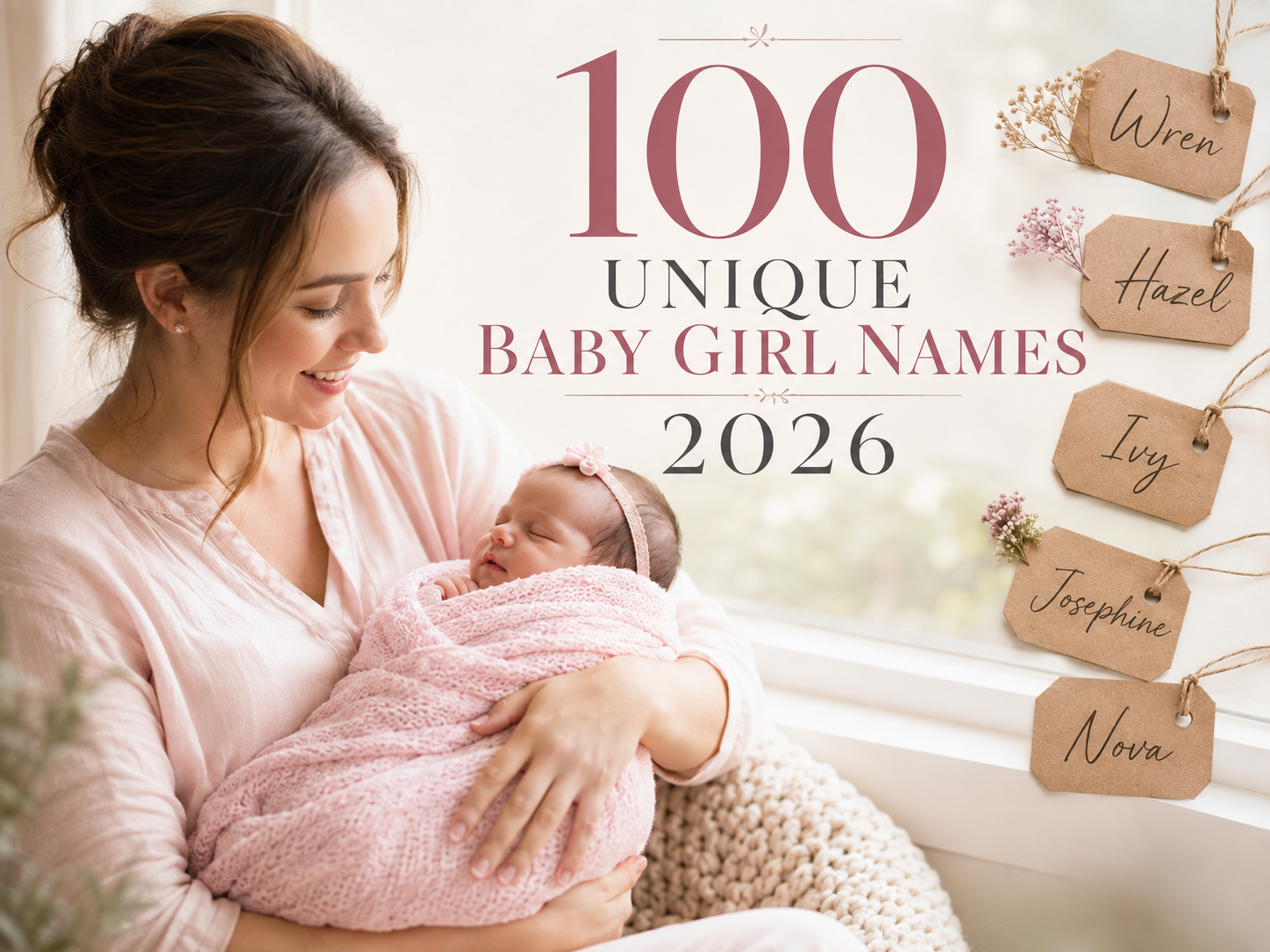
Unique baby girl names are more popular than ever with parents who want something meaningful without following the crowd. If you’re expecting and scrolling through the same top-10 lists everywhere, this guide takes a different approach — covering 100 genuinely unique options for 2026, organized by style, so you can find a name that actually fits your taste.unique baby girl names
Table of Contents
- Why Parents Are Choosing Unique Names
- 100 Unique Baby Girl Names by Category
- How to Pick a Name That Ages Well
- Checking Name Popularity Before You Decide
- Frequently Asked Questions
- Final Thoughts
Why Parents Are Choosing Unique Names
For years, US baby name trends leaned heavily toward a small pool of extremely popular choices, with the same handful of names topping birth certificate records year after year. That’s shifted noticeably in the last decade. Parents increasingly want a name that feels personal rather than one that will be shared by three other kids in the same kindergarten class.unique baby girl names
A few forces are driving this shift:
- Social media exposure to name ideas from other cultures and eras, unique baby girl names widening what feels “normal” to American parents
- A desire for individuality, unique baby girl names especially among younger parents who grew up as one of several kids sharing their own name
- Renewed interest in vintage and heritage names, pulling from grandparents’ generations rather than recent trends
- Nature and word-based names, which have grown steadily as parents look beyond traditional naming conventions entirely
100 Unique Baby Girl Names by Category
Nature-Inspired Names
Wren, Hazel, Ivy, Fern, Sage, Wisteria, Marigold, Briar, Meadow, Skye, Aspen, Willow, Juniper, Clover, Laurel, Petra, Coral, Opal, Dahlia, Cove
Vintage Revival Names
Mabel, Edith, Beatrice, Josephine, Cecilia, Adelaide, Florence, Rosalind, Winifred, Agatha, Dorothea, Vivienne, Clementine, Marguerite, Louisa, Henrietta, Genevieve, Theodora, Constance, Millicent
Modern Invented and Word Names
Nova, Story, Wilder, Journee, Legacy, Everly, Amara, Zaria, Elowen, Kalani, Sienna, Marlowe, Reverie, Solstice, Indigo, Lumen, Sable, Onyx, Wynter, Kestrel
International and Multicultural Names
Amira, Leilani, Saoirse, Anouk, Xiomara, Freya, Ines, Naomi (Hebrew origin), Elif, Zofia, Isla, Niamh, Aiko, Larisa, Priya, Mireille, Katarina, Amaya, Lior, Selin
Short and Strong Names
Rue, Wren, Zola, Elle, Nell, Bex, Fae, Lux, Sky, Fay, Ora, Ivy, Nia, Kai, Zoe, Eve, Lux, Ada, Vex, Ren
How to Pick a Name That Ages Well
Uniqueness matters, but so does longevity. A name that feels fresh and exciting today needs to work equally well for a toddler, a teenager, and eventually a professional adult. A few practical filters help:
- Say it out loud in full, including middle and last name, to catch any awkward rhythm or unintended meaning
- Consider nickname potential, even if you don’t plan to use one — kids often pick up their own shortened versions regardless of parental intent
- Check spelling difficulty, since names requiring constant spelling clarification can become mildly frustrating over a lifetime
- Think about professional settings, imagining the name on a resume or business card decades from now, not just on a nursery wall
Checking Name Popularity Before You Decide
Even names that feel obscure can be climbing fast in popularity without parents realizing it. The Social Security Administration’s baby names database tracks yearly name frequency across the US, and checking a name here before finalizing your choice can reveal whether it’s truly rare or quietly trending upward. If your goal is genuine uniqueness, aim for names ranked well outside the top 500 for the most recent available year.
Names to Consider by Sibling Set Style
If you already have children, or plan on more, keeping some thematic consistency across sibling names is worth thinking about early:
- All nature names: Willow, Hazel, Wren, and Fern pair naturally as a sibling set with a consistent botanical theme
- All vintage revivals: Beatrice, Josephine, Cecilia, and Adelaide share a cohesive old-world feel across siblings
- Mixed styles with shared sounds: names like Ivy, Nell, and Zola share short, punchy structures even without a strict category theme
- International consistency: choosing names from the same cultural or linguistic tradition, such as Freya and Astrid (Scandinavian), keeps a sibling set feeling connected without repeating a single style too literally
Common Regrets Parents Report After Naming
Surveys and parenting community discussions consistently surface a few recurring regrets worth learning from before you finalize your own decision:
- Choosing a name too quickly under family pressure, rather than taking the full time available to sit with the decision
- Underestimating how often a name would need to be spelled out for teachers, doctors, and other professionals over the years
- Picking a name too closely tied to a specific trend, which some parents later feel dates their child to a particular naming moment
- Not considering the name’s shortened or nickname version early enough, leading to a mismatch between the intended full name and what actually gets used daily
Learning from these common patterns can help you avoid the most frequently reported regrets during your own decision process.
Popular Combinations From This List Worth Considering
A few first-and-middle pairings from the categories above tend to flow especially well together, offering ready-made inspiration if you’re stuck choosing a middle name: Wren Josephine, Hazel Marguerite, Ivy Constance, Nova Beatrice, and Sage Adelaide each pair a shorter, more modern-feeling first name with a longer vintage middle name, creating balance without requiring extensive additional research.
Frequently Asked Questions
Are unique names harder for kids growing up?
Not inherently. Most naming difficulty comes down to pronunciation and spelling complexity rather than uniqueness itself — a distinctive but phonetically simple name tends to cause fewer issues than a common name with unusual spelling.
How do I know if a name is too unusual?
A useful test is whether the name is recognizable as a name at all, even if unfamiliar. Names built from real words, nature terms, or established naming traditions from other cultures tend to read clearly as names, even when uncommon in the US.
Should I worry about a name going out of style?
Vintage and nature-inspired names have historically aged better than trend-driven invented names, since they’re tied to enduring categories rather than a specific cultural moment.
Final Thoughts
Choosing unique baby girl names doesn’t mean sacrificing meaning or practicality — it just means looking a little further than the most common lists. Whether you’re drawn to nature, vintage revival, or names pulled from other cultures, the 100 options above offer a genuine starting point for finding something that feels distinctly yours. For more inspiration, take a look at our guide to choosing the perfect baby name.
Middle Name Pairing Ideas
Once you’ve settled on a unique first name, the middle name often becomes the next challenge. A few pairing approaches tend to work well:
- Contrast in length — pairing a short, punchy first name with a longer, flowing middle name (or vice versa) tends to create a pleasant rhythm, such as Wren Josephine or Genevieve Sky
- Family name as middle name — using a grandmother’s or great-grandmother’s name as the middle name lets you honor family while still keeping a unique first name
- Meaning-matched pairs — choosing a middle name with a complementary meaning, such as pairing a nature name with another nature name, creates thematic consistency without repeating yourself
- Initials check — always spell out the full initials before finalizing, since unfortunate initial combinations are one of the most common regrets parents report after the fact
Names by Decade: Where These Picks Fit Historically
Understanding where a name falls in historical popularity cycles can help set expectations for how “unique” it will actually feel:
- Pre-1950s revival names (Mabel, Edith, Beatrice, Agatha) were common a century ago, faded through the mid-1900s, and are now climbing again — these read as unique today but were once mainstream
- 1970s-1990s nature names (Ivy, Hazel, Willow) had a smaller presence during those decades and have grown substantially since, meaning they’re genuinely less common among current grandparents’ generation
- 2010s-2020s invented names (Nova, Story, Journee) are the newest category, with limited historical precedent, making their long-term staying power harder to predict compared to names with centuries of established use
How International Names Are Being Embraced in the US
American naming culture has grown considerably more open to names from outside traditional English, biblical, or European roots. This shift reflects broader demographic changes as well as increased cultural exposure through media, travel, and multicultural communities. Names like Amira, Leilani, and Saoirse — once rarely seen outside specific cultural communities — now appear regularly across the broader US naming landscape, often chosen by parents with no direct cultural tie to the name’s origin simply because the sound and meaning resonate with them. This openness is part of why the “unique” category has expanded so significantly over the past decade, offering far more genuine variety than name lists from even ten years ago.
Working With a Partner Who Prefers More Traditional Names
If you’re drawn to unique names but your partner leans traditional, finding common ground is possible without either person fully compromising their preference:
- Look for names that are unique but still recognizable as established names, rather than fully invented words — this often satisfies both a desire for distinctiveness and a preference for familiarity
- Use the unique name as a middle name if the first name needs to be more traditional for one partner’s comfort, preserving the meaningful choice without full disagreement
- Research the historical roots of “unique” options, since many names that feel unusual today (like Hazel or Beatrice) were once extremely common, which can ease a traditional-leaning partner’s hesitation
- Revisit the shortlist together after both partners have had time with it separately, since initial reactions to unfamiliar names often soften with repeated exposure
Unique Names and Their Growing Availability in Pop Culture
As unique names have grown in popularity, they’ve increasingly appeared in books, television, and film, which has had an interesting secondary effect: names that once felt entirely invented now have some cultural reference points, making them feel more familiar to extended family and friends who might otherwise find them unusual. This growing presence in mainstream media has arguably accelerated broader acceptance of unique naming choices, since parents no longer need to explain an unfamiliar name from scratch in the way they might have a decade or two ago.
A Final Word on Trusting Your Own Taste
With 100 options and countless combinations, it’s easy to second-guess yourself into decision paralysis. Ultimately, the name that feels right to you and your family carries more weight than any trend list, including this one. Use these 100 unique baby girl names as a genuine starting point for exploration rather than a checklist to work through mechanically — the goal is finding the handful that spark real excitement, not exhausting every option before deciding.
Keeping a Running Shortlist
One habit that consistently helps parents move from a long list of unique baby girl names to a final decision is keeping a simple running shortlist on your phone or in a shared note, updated as your preferences shift throughout pregnancy. Revisiting it every few weeks, rather than trying to force a decision in a single sitting, tends to surface your genuine favorites more reliably than attempting to rank all 100 names at once. By the time you’re closer to your due date, the names that have consistently stayed on your shortlist — through multiple revisits and reconsiderations — are usually the ones that end up feeling truly right for your daughter. ## Where to Go From Here
If this list has narrowed your focus to a handful of favorites, the next step is simply living with those names for a while — writing them down, saying them aloud in different settings, and noticing which ones still feel exciting weeks later. That gradual process, more than any single article or list, is what ultimately turns a name from an idea on a page into the name your daughter carries for life.
